Pink Bow Baby Bib Embroidery Design Review
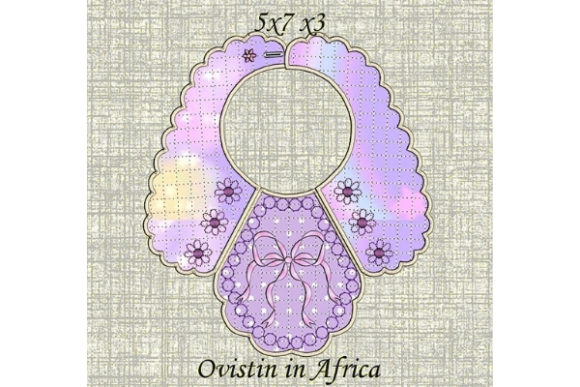
As a professional embroidery designer working with small business clients, I often review new digital files to assess their potential for branded merchandise. The Pink Bow Baby Bib for Small Hoops file is an interesting candidate. Based purely on the title and description, the design immediately presents a classic, playful, and friendly personality. It’s clearly decorative, but that doesn’t automatically disqualify it for business use. A well-executed, charming design can enhance brand identity if it aligns with a company’s visual story.
First Impressions for Brand Application
The name suggests a nursery-focused, gentle aesthetic. For a business, this translates to warmth and approachability. If your brand—perhaps a boutique baby store, a family-run café, a creative studio specializing in children’s goods, or a handmade Etsy shop—wants to communicate care, sweetness, and attention to detail, this machine embroidery design could serve as a subtle brand accent. It’s not bold or aggressively modern; it feels classic and handmade. This is a strength for businesses wanting to appear personal and premium, not corporate.
However, the description notes it’s “digitized for ladies with small hoop embroidery machines” and “done in 3 parts and sewn together.” This is crucial information. It tells me the original intent is for a physical baby bib product. For commercial embroidery applications, we must consider how this multi-part construction translates when the design is used as a single, unified embroidered patch or logo element.
Evaluating Real-World Business Use Cases
Let’s explore practical scenarios where the Pink Bow Baby Bib for Small Hoops could function as a brand asset. Its small-hoop compatibility is a major advantage for many small business merch items.
Uniforms and Wearable Branding
For staff in a children’s boutique or a family-friendly bakery, this design could be an elegant sleeve detail or a chest logo accent on polo shirts. It’s unlikely to be the primary logo, but as a secondary motif, it reinforces a nurturing brand identity. On an apron for a florist or pet brand with a gentle image, it could add a unique, handmade product touch. The key is scale—it must be sized appropriately so the bow and bib details remain clear without overwhelming the garment.
Merchandise and Customer Engagement
Consider tote bag design or cap embroidery for a small business. This design could be a charming mark on a canvas tote offered as a customer gift or event merch. For an Etsy seller specializing in nursery items, embroidering this onto a simple cotton hat could create a cohesive product line. It adds perceived value and visual consistency across different custom apparel items.
The Embroidered Patch Potential
This is one of the most versatile applications. A patch based on this design could be affixed to product packaging, used as a label on handmade goods, or even sold as standalone craft business assets. The “small hoop” specification suggests it can be produced at modest sizes, which is ideal for patch-making. However, the “3 parts” note requires careful testing. A patch must be a single, sturdy unit. You would need to verify that the embroidery file stitches the elements together cohesively when hooped as one design, not as three separate physical pieces.
Critical Considerations for Professional Results
Not every design file is ready for every business application. Here are the points a professional embroidery designer must scrutinize before using the Pink Bow Baby Bib for Small Hoops in commercial embroidery projects.
Scale and Detail Integrity
The design should be tested at very small sizes if intended for a cap front or a tiny product label. Can the bow’s curves and the bib’s outline remain distinct when minimized? Tiny lettering (if present) and detailed outlines can blur or fill in at high stitch density. Always run a test stitch on scrap fabric of the same type you’ll use for the final product.
Fabric and Color Adaptation
The original pink color scheme is sweet, but business uniforms often are dark or neutral. Test the design in monochrome—black and white thread on a dark polo, for example—to see if the form holds up without color contrast. Thread colors must be chosen for visibility and brand alignment. Also, fabric texture matters. This design might look perfect on smooth cotton but lose definition on a textured twill apron. Always use the proper stabilizer.
Durability and Presentation
Items like work shirts and tote bags need frequent washing. A design with many stitches or delicate details can wear faster. Inspect the stitch spacing and density in the file. A too-dense design can feel stiff and may puckering on lighter fabrics. Before production, create a mockup for client approval, either a physical sample or a high-quality printable mockup, to ensure it meets the brand’s standards for professionalism.
Impact on Brand Identity and Trust
Using a design like this isn’t just about decoration; it’s a brand communication tool. A well-embroidered, charming motif on a staff apron signals attention to detail, elevating product value. For a customer, it builds subconscious trust—the business cares about aesthetics and quality. Consistency is key: if this bib design appears on your website, your packaging, and your staff uniforms, it strengthens customer recognition.
However, misapplication can harm professionalism. If the design is too large, too blurry on a curved cap embroidery surface, or clashes with your other design assets, it can look amateurish. Always compare it beside other design assets in your brand portfolio. Does it fit visually?
Final Designer Notes and Essential Checks
My practical advice for any business considering this digital embroidery file for their merchandise:
- Confirm the technical specs. The description mentions small hoops and three parts. You must check the actual hoop size requirement (e.g., 4x4, 5x7) and whether the file is one unified design or requires manual assembly. This is vital for patch production.
- Test on real fabric. Never assume a file will work. Stitch it out on the exact material of your final product—apron canvas, cap mesh, tote bag cotton—using correct stabilizer.
- Review for commercial use. The product category is “Nursery” and type is “Embroidery.” You must confirm commercial licensing before business use. Some files are for personal use only. Ensure you have the right to use it on items you sell or on staff uniforms.
- Assess the finished product. Look at the physical test stitch. Does it feel professional? Would you be proud to have it represent your business on a uniform or product? That is the ultimate question.
The Pink Bow Baby Bib for Small Hoops has inherent potential for businesses whose brand personality aligns with its classic, playful charm. By treating it as a serious design asset and applying rigorous professional standards to its execution, you can transform a decorative nursery design into a valuable element of your small business’s visual identity and merchandise.