Military Service Medal Embroidery Design Review
As an embroidery designer preparing for a craft fair weekend, every design file gets a careful review. It’s not just about how it stitches on screen, but how it translates into a product that attracts attention, feels premium in a customer’s hands, and can be produced reliably for my booth. Let’s examine the Military Service Medal embroidery design from this practical, seller-focused perspective.
First Impressions: Premium, Decorative, and Purposeful
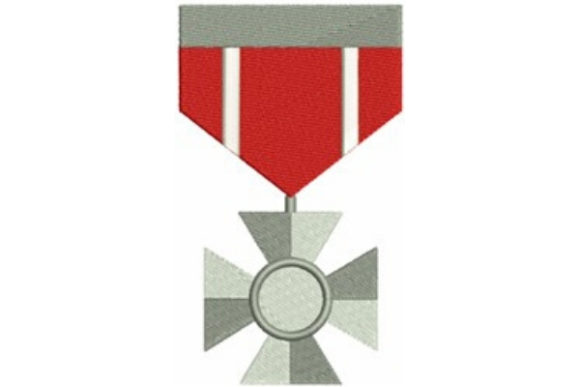
The description notes a beautiful design with lovely features. The title, Military Service Medal, immediately conveys a sense of dignity, honor, and structured elegance. This isn’t a cute or funny motif; it feels decorative, premium, and purposeful. That mood is a significant advantage. At a market, amidst casual designs, a piece with this gravity can stand out. It speaks to a specific, often deeply emotional, audience. The visual promise is of a clean, high-quality embroidery file that will stitch out beautifully, which is the foundation we need.
Product Fit: Where This Medal Shines
My first task is imagining this design on my actual booth products. The goal is to match the design’s character with an item that amplifies its value.
Tote bags and market bags are a strong candidate. A well-placed Military Service Medal on a sturdy canvas tote elevates it from a simple carrier to a statement piece, likely appealing to customers seeking a meaningful, everyday item. Pillow covers in a neutral linen could work wonderfully, creating a decorative, respectful accent for a living space.
Embroidered patches are perhaps the most natural fit. A crisp, dense Military Service Medal patch has immense appeal; it can be applied to jackets, bags, or kept as a collectible. This transforms the digital embroidery file into a versatile, tangible craft fair product.
For kitchen items, consider a tea towel or apron as a giftable handmade item. On the body of an apron or the border of a high-quality towel, the design becomes a focal point of craftsmanship. Caps present a challenge due to curved surfaces, but if the design’s scale allows, a cap with this emblem could be a powerful seller.
Smaller items like fabric pouches or pencil cases might be less ideal unless the design is scaled down significantly, which we must test. The key is selecting products where the design’s premium feel enhances the item’s perceived value.
Production and Selling Practicalities
Turning a file into batch-produced handmade products requires a cool-eyed assessment.
Stitch Density and Fabric Compatibility
The description suggests lovely features, which often means detail. I immediately think about stitch density. Detailed, beautiful designs can sometimes be dense. This requires the right stabilizer and fabric choice. On textured towels or thick fabrics, a very dense design might not sink in cleanly. Testing on scrap fabric, including dark colors, is essential to check thread contrast and clarity.
Scale and Clarity
How does it work as a small accent versus a large focal point? For a large tote bag design, it could be magnificent. But if the design has tiny lettering or intricate lines, shrinking it for a small pouch might cause those details to lose definition. This affects not only production but how it photographs for online listings like Etsy. A clear, crisp image is vital for a digital seller.
Batch Production and Consistency
For a craft fair, I need designs that are repeatable. A “high-quality embroidery” that stitches out beautifully consistently is what allows batch production. This reliability supports brand consistency across my small shop products. Before committing, I must confirm commercial licensing for selling finished products and understand the recommended hoop size. These are not provided in the description, so checking with the file distributor is a necessary step.
The Booth Display and Customer Engagement
At the fair, how does a product with the Military Service Medal perform?
It attracts a different kind of attention. Customers might not breeze past it; they may stop and engage more thoughtfully. It can spark conversation, which is a huge win for buyer engagement. In a booth display, grouping items featuring this design—a pillow, a patch, a tote—creates a thematic display strength. It shows versatility and caters directly to a niche.
The handmade quality is paramount. If the design stitches out with precision, the products feel professional and valuable, justifying a premium price point. It’s wise to create at least one real mockup of the best product candidate (perhaps a tote bag or patch) to use as a sample at the booth. A physical sample is far more persuasive than a printable mockup.
Careful-Use Notes for the Maker
- Always test first. Run the machine embroidery design on the exact fabric type you plan to use, especially for challenging surfaces like curved caps.
- Inspect stitch density on your test piece. Adjust stabilizer if needed to prevent puckering on finer fabrics like pillow cover linen.
- Compare fabric colors. See how the thread colors pop on both light and dark backgrounds. A beautiful design can be muted on a poor color match.
- Review spacing and sizing. Ensure the design’s proportions look balanced on your chosen product. A medal might need a certain scale to feel correct.
- Photograph with care. For your Etsy listings or website, photograph the finished product in good light to capture every lovely feature. The online image sells the digital embroidery file’s potential.
Final Designer Thoughts
The Military Service Medal design, based on its description, holds strong potential for craft fair sellers and boutique makers targeting a respectful, decorative niche. Its success hinges on the practical execution: choosing products that complement its dignified mood, ensuring production reliability through testing, and presenting it in a way that highlights its handmade quality. For embroidery business owners, it represents an opportunity to create products with emotional resonance and visual distinction. My advice is to treat it as a premium design asset. Invest time in the test stitch, select high-quality base products, and display it with pride at your booth. When done right, it won’t just stitch out beautifully on your machine; it will sell beautifully at your market.